<iframe src="https://docs.google.com/document/d/e/2PACX-1vQv0xInpiH6htdvg9y-qvMIxXbDsnd_zutl57qU8ncgE9jOxs8pKHfW2fEtSp_EVg/pub?embedded=true"></iframe><iframe src="https://docs.google.com/document/d/e/2PACX-1vQv0xInpiH6htdvg9y-qvMIxXbDsnd_zutl57qU8ncgE9jOxs8pKHfW2fEtSp_EVg/pub?embedded=true"></iframe>
Thursday, August 6, 2026

Sunday, December 25, 2022
Revisiting 'Galen in Tibet'
Abstract
This paper readdresses the assertion found in much secondary literature that Greek medicine was adopted in Tibet in the seventh and eighth centuries. I discuss some of the traces of Galenic medical knowledge in early Tibetan medicine, and raise the question of why Tibetan medical histories who mention Galen give Galenic medicine a much more significant place than is evidenced in the Tibetan medical literature itself. I discuss some historiographical considerations and argue that the centrality given to Galenic medicine is more indicative of the period in which these sources are written than of the period which they presumably describe.
Friday, June 14, 2019
The fifty-one mental factors
Five omnipresent mental factors
These five accompany all minds. Without them complete apprehension of an object cannot occur.
- Feeling: a distinct mental factor that is an experience of pleasure, pain or indifference. Feeling experiences the results of one’s past actions and can lead to reactions of attachment, aversion, closed-mindedness, etc.
- Discrimination: a distinct mental factor that has the function to distinguish “It is this and not that” and to apprehend the characteristics of the object. It differentiates and identifies objects.
- Intention: a distinct mental factor that moves the primary mind with which it shares five similarities and other attendant mental factors of that primary mind to the object. It is the conscious and automatic motivating element that causes the mind to involve itself with and apprehend its object. It is action, karma. It makes the mind engage in what is constructive, destructive and neutral.
Thursday, April 4, 2019
Vegetable་ Names in Tibetan Medicine
ཐལ་ཀུབ།
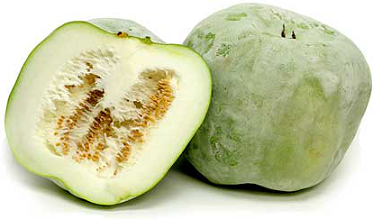
Ash Gourd (ऐश गॉर्ड), Winter Melon (विंटर मेलन) – पेठा [ Petha ]
Benincasa hispida
སྣེ།
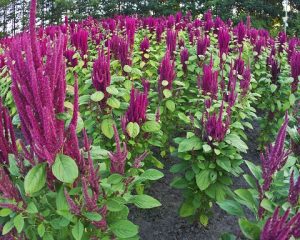
Amaranth (ऐमरंथ) – चौलाई की सब्जी [ Chaulaee Kee Sabjee ]
Amaranthus
Thursday, December 20, 2018
Healing Emotions
Keynotes:

Immune System and Disease
The lowest amount of artery blockage was found in the group that had the least anger, and the people that had most anger had the highest blockage. Researcher at the Harvard Medical School found that the single emotion most commonly happened just two hours prior to a serious heart attack was anger.
Men have much more of it women do. This hormone may heighten aggressiveness, although there is a debate on the question. But people who commit violent crimes tend to have higher-than-usual levels of testosterone. If you have a high level of testosterone, you like to control situations, and so you tend to be argumentative or fight more often. It seems to make you more vulnerable to heart disease.

The state of mind can affect the strength of the immune system and robustness of the cardiovascular system.
The negative emotions such as depression, anger, and depression are very bad for our health. These emotions worsen the condition of the disease, slow down recovery from illness. In contrast, positive emotions such as loving kindness, compassionate mind, social connection are tools that can maintain better health, provide protection against illness, both physically and mentally. The impact of negative emotions that harm the our body and mind, is comparatively faster that the impact of positive emotions that robust our body and mind.
Immune System and Disease
The lowest amount of artery blockage was found in the group that had the least anger, and the people that had most anger had the highest blockage. Researcher at the Harvard Medical School found that the single emotion most commonly happened just two hours prior to a serious heart attack was anger.
Men have much more of it women do. This hormone may heighten aggressiveness, although there is a debate on the question. But people who commit violent crimes tend to have higher-than-usual levels of testosterone. If you have a high level of testosterone, you like to control situations, and so you tend to be argumentative or fight more often. It seems to make you more vulnerable to heart disease.
Saturday, July 22, 2017


Monday, June 5, 2017
Men-Tsee-Khang Observes Centenary Celebration in South America
A 5-member team, headed
by Dr. Tenzin Lhazey accompanied by Dr. Norchung, Mrs. Lhamo Yangchen (Tibetan
Astro. Science Practitioner), Mr Phuntsok Rigzin (Chief Account of
Men-Tsee-Khang), and Mr Tenzin Choekyab, (Head of Sales
and Medical Store Department of Men-Tsee-Khang), visited South America
from March 23, 2017 to May 3, 2017, in honor of the Centenary Celebration of
Men-Tsee-Khang, the Tibetan Medical & Astro. Institute of His Holiness the
Dalai Lama.

The team conducted a series of lectures on Tibetan
medicine and Astro. Science, workshops on bsku nye (Tibetan Medical Massage), kag
rtsis (yearly prediction) and bag
rtsis (marital compatibility), medical consultation, Astro. oral
consultation, and held an exhibition on Tibetan Medicine and Astro-Science in
Argentina, Chile, Peru and Brazil
Location: Cordoba, Argentina
The team began the Centenary
Celebration of Men-Tsee-Khang in Cordoba, the second largest city of Argentina,
with a 3-day intensive program arranged by Mrs. Carolina, involving a daily
series of lectures, workshops and consultations.
On the evening of March
28th, Dr. Norchung delivered a lecture on The Mind-Body Relationship and Its Implication on Health, and
Mrs. Lhamo Yangchen, TASP, lectured on An Introduction to Tibetan Astro.
Science to a gathering of over 100 people at the Conference Hall of Fundacion
Villa Carlos Paz. On March 29th, Dr. Tenzin Lhazey gave a talk on Diagnostic
Methods in Tibetan Medicine and took questions from a gathering of 30
doctors and 15 nurses at Cordoba Public Hospital, the oldest and largest health
center in the city. On March 30th, Dr. Norchung spoke on Emotional Balance
and its Impact on Health and Mrs. Lhamo Yangchen conducted a workshop on kag rtsis (yearly prediction). In
Cordoba City, our doctors also provided 50 patients with Tibetan medical
treatment and 21 people received Astro. oral consultation from our Astro.
science practitioner.
Friday, November 4, 2016
The Relationship between Mind and Body
Our present body comes from the subtle body, and the subtle body from and indivisible aspect of loong and mind.
According to Sutra, at the time
of conception, a body forms, and simultaneously feeling, cognitive aspect
develop. This entirety remains in dependent nature until death occurs. When the
mind separates from the body, body heat dissolves, and breath ceases, the
person is considered death.
Thursday, December 3, 2015
The Psychological Disorders in Western Science
In these notes I
discuss the psychological disorders: their classification and reclassification,
behavioral "symptoms," and, in selected cases where something is
known about it, heritability and underlying physiological changes.
Classification of the Psychological Disorders
In medicine,
classification of the various medical disorders typically is based on the
particular combinations of symptoms that patients present to the physician; the
physician then renders a diagnosis based on those symptoms. Thus, if a patient
comes into the doctor's office complaining about chills and fever, muscular
aches and pains, nausea, and so, the physician might conclude from these
symptoms that the patient has the flu. The idea here is that patients who
present the same symptoms are probably suffering from the same underlying
disorder, a common cause for which there will be a specific treatment.
Psychiatrists, clinical psychologists, and other mental health workers
confronted with a variety of behavioral, cognitive, and emotional
"symptoms" of their clients likewise began to identify combinations
of these symptoms that seemed to hang together, forming a particular
"syndrome" that differentiated these particular cases from others.
Category labels were developed for the different syndromes and it was hoped
that those falling into the same category might turn out to be suffering from
the same set of underlying causes of their condition. Thus was born labels such
as "schizophrenia," "hysteria," and "manic-depressive
psychosis.
Monday, October 26, 2015
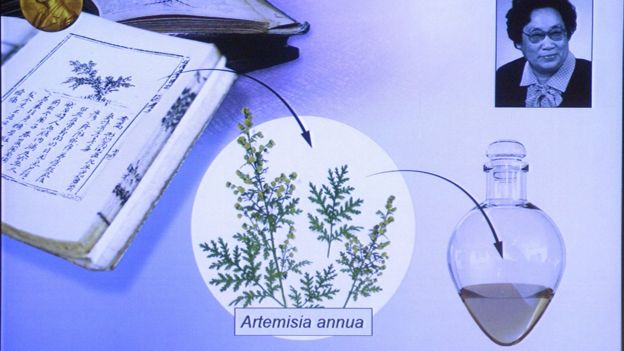
Artemisia Annua L.
The Noble prize for medicine or physiology 2015 inspired by Chinese traditional medicine
 |
Saturday, September 19, 2015
Tantric Stick Therapy
Yug choe (Tantric Stick Therapy)
Tantric stick therapy is one of the therapeutic measures only mentioned in Sowa rigpa (lit: repairing or restoring methods) system of medicine, to restore mental and physical imbalance.
Origin:
This therapy is ascribed to the tantric practice of Nyima Woeser, a dakini, who transmitted the tradition to Ugen Pa, a great yogi practitioner in the fourteenth century, resulting in its dissemination in the Land of Snow, the Roof of the World.
Tantric stick therapy is indicated for all kinds of cold-natured disorders, namely baekan and loong, and is contraindicated for all kinds of hot-natured disorders, and on the vulnerable organs.

Friday, August 14, 2015
Classification of mental disoders in Ayurveda
Mental disorders in Ayurveda are classiffied into seven broad types: 1. Unmada-insanity, 2. Apasmar-epilepsy, 3. Avasada-depression, 4. Chitto Udvega-anxiety neurosis, 5. Mansa Mandata-mental retardation, 6. Atatva abhinevish-obssive disrorders, and 7. Madatyaya-intoxication.
Source: Heritage Amruth. Vol 11 ISSUE 1 BI MONTHLY FEBUARY 2015
Tuesday, May 19, 2015
The guidlines for Naming of Diseases
The significance of naming an object, place, people, animals and etc; is to avoid confusion over 'identification and recognitioin of things. The naming of disease is also very important to make us know what it is; but giving people's name and places to a disease, leads to stigmization of the concerned. World Health Organization has recently prepared "Guidlines for Naming of Diseases", revealing a message to avoid assignment of a perons or region to a human disease and it says:
Given the increasingly rapid and global communication through social media and
other electronic means, it is important that an appropriate disease name is assigned
by those who first report a new human disease. WHO strongly encourage scientists,
national authorities, the national and international media and other stakeholders to
follow the best practices set out in this document when naming a human disease. If
an inappropriate name is released or used or if a disease remains unnamed, WHO,
the agency responsible for global public health events, may issue an interim name
for the diseases and recommend its use, so that inappropriate names do not become
established.
The guidlines link is http://apps.who.int/iris/bitstream/10665/163636/1/WHO_HSE_FOS_15.1_eng.pdf?ua=1
Saturday, August 30, 2014
Research Works on Tibetan Medicine Published in International and National Journals
Scientific Papers on the Efficacy and Safety of Tibetan Medicine in the treatments of Challenging Diseases

Conclusion: We report a significant improvement in glycemic control with the use of Tibetan medicine in patients with a recent onset of type 2 diabetes compared with patients treated only with diet and exercise. The improvement in glycemic control was observed at 3 and 6 months after the start of the treatment. We have not measured insulin or C-peptide levels in our patients.
The Efficacy and Safety of Traditional Tibetan Medicine in the Treatment of Essential Hypertension published in the Research and Reviews: A Journal of Medicine
Monday, May 26, 2014
A Tibetan Doctor Recieves Padma Shree Award
 |
| Dr Yeshi Dhondan is examining pulse |
He was born in Lhunpo Shol, a region near to Ngakar Tse in Lhokha, Chinese occupied Tibet, was descended from the greater family lineage of Ngog Choeku Dorjee and Ngog Lodhen Sherab. At the age of 12, he began to enroll on the course of Tibetan medicine and astrological science at Men-Tsee-Khang (Tibetan Medical & Astro. Institute in Lhasa), under the tutelage of renowned physicians, namely Dr Kyenrab Norbu, a personal physician to H.H. the 13th Dalai Lama, and at 20, he graduated the institute.
Thereafter, he practiced Tibetan medicine in the regions of
Lhokha and Dhagsa, during which many people died of an epidemic outbreak. He
formulated a new recipe and was able to eradicate the deadly disease from the
regions.
Tuesday, April 22, 2014
How can we enhance memory power
Memory plays a significant role in our daily activities, from writing articles to eating foods, and also determines success of one's life.
There are many factors which can increase our memory powder. Keeping concentration on a single subject without distraction increase memory powder. On a pace of walking, the right foot steps up alternating with the left foot, upon which
There are many factors which can increase our memory powder. Keeping concentration on a single subject without distraction increase memory powder. On a pace of walking, the right foot steps up alternating with the left foot, upon which
Friday, February 7, 2014
MTK Performs a Ritual to Appease Landlord Spirits
Dharamsala: On 6th November 2013 Men-Tsee-Khang
performed a ritual at Triund, a part of Dhauladhar Range, to appease landlord
spirits, as mentored by His Eminence Dzogchen Ganor Rinpoche.
Background
Some of the natural disasters occur
as and when landlord spirits are disturbed by human’s natural exploitation,
massive construction and afforestation. Rituals are performed to appease these
landlord spirits, whether or not disturbed.
Thursday, December 19, 2013


Thursday, October 10, 2013
Think for Tomorrow, Act Today

Tuesday, September 17, 2013
A single drug against a single cause?
The nature of Tibetan Medicine as multi-compound formula is difficult to understand from a scientific mindset. Why so? On the one hand modern science is in its foundations strongly influenced by Greek philosophy Aristotle ()384 BC-322 BC) already proclaimed the existence of a single proper cause fro all observed phenomena:. Later the medieval physician Paracelsus (1494-1541) stated that "against each disease there exists a plant". These concepts paved the wary for modern pharmaceutical science: diseases are treated with single active compounds. In modern "rational" Phytotherapy this results in herbal products containing only one single herb.
On the other hand, the overall concepts of Tibetan medicine are largely unknown. In modern medicine, a medical indication has to be defined in Western medical terms. Introducing concepts of Tibetan medicine into modern medicine entails not only a linguistic translation but a profound understanding of both Tibetan and Western medical concepts and terminology. A close collaboration of experts in these fields is therefore necessary.
On the other hand, the overall concepts of Tibetan medicine are largely unknown. In modern medicine, a medical indication has to be defined in Western medical terms. Introducing concepts of Tibetan medicine into modern medicine entails not only a linguistic translation but a profound understanding of both Tibetan and Western medical concepts and terminology. A close collaboration of experts in these fields is therefore necessary.
Subscribe to:
Posts (Atom)